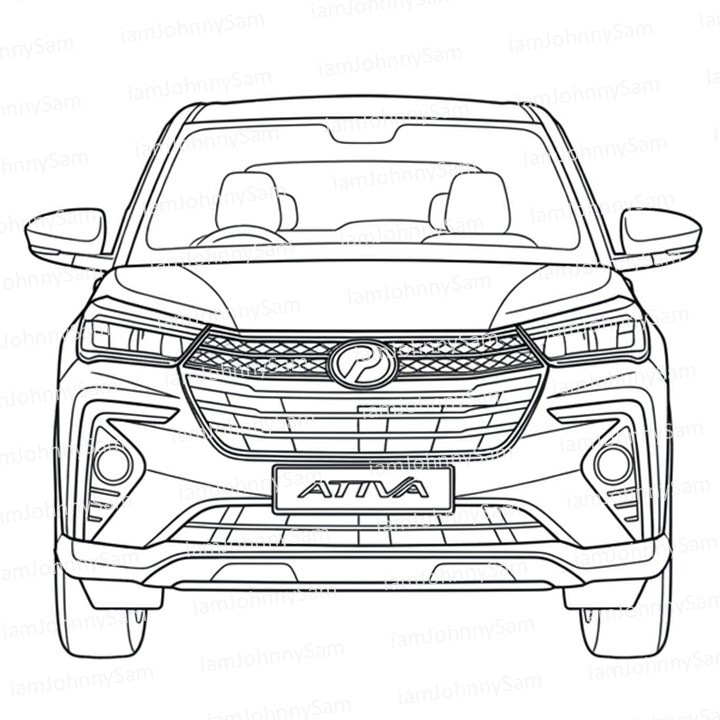
When the vehicle market reopened in Sri Lanka in 2025, I made a decision that felt both exciting and slightly emotional — I sold my first car, the Perodua Axia G, which had been my daily companion for nearly a decade. After months of research and anticipation, in December 2025 I took delivery of a Perodua Ativa AV in Glittering Silver from the very first bulk shipment to Sri Lanka.
Since then, I’ve become increasingly fascinated by this car. What initially attracted me was the value proposition and technology package, but the more I learned, the more I realized that the Ativa is not just another small SUV. Underneath the familiar Perodua badge lies a surprisingly modern engineering package developed through deep collaboration with Daihatsu and Toyota. This article is my personal deep-dive and long-term ownership summary of the Perodua Ativa AV.
Product Page: Perodua Ativa - 5 Seater SUV | Book Now!
Project Page in SL: Perodua Ativa | Best 5-Seater SUV Car in Sri Lanka
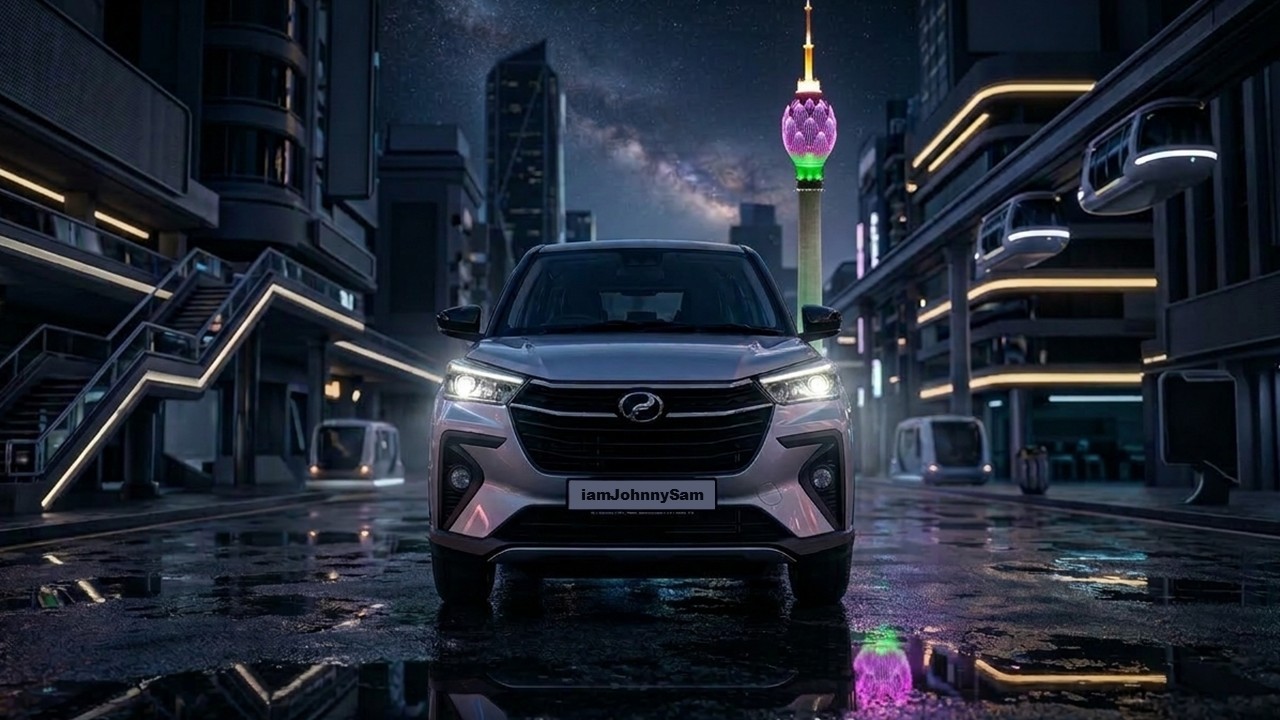
Overview of the Perodua Ativa AV
The Perodua Ativa AV (codenamed D55L) is the flagship variant of Perodua’s first compact SUV and represents a major technological step forward for the brand. Launched globally in 2021, the Ativa introduced several firsts for Perodua: a turbocharged engine, a Dual-Mode Continuously Variable Transmission (DCVT), and Level 2 Advanced Driver Assistance Systems (ADAS).
Positioned in the B-segment SUV category, the Ativa sits above the Myvi and overlaps in price with the larger Aruz. However, the Ativa is the more technologically advanced product and represents Perodua’s transition into a new generation of vehicles built under the Perodua Smart Build blueprint. The Ativa is designed as a modern urban SUV that balances efficiency, safety, practicality and technology for young drivers and small families.
Specifications for the Ativa AV
The AV variant is the range-topping model, distinguished by its higher-end materials and full suite of technology
|
Category
|
Parameter
|
Specification
|
|
Dimensions
|
Overall Length
|
4,065 mm
|
|
Overall Width
|
1,710 mm
|
|
|
Overall Height
|
1,635 mm
|
|
|
Wheelbase
|
2,525 mm
|
|
|
Ground Clearance
|
200 mm
|
|
|
Turning Radius
|
5.1 m
|
|
|
Weight
|
Kerb Weight
|
1,035 kg
|
|
Gross Vehicle Weight
|
1,680 kg
|
|
|
Engine
|
Engine Code
|
1KR-VET
|
|
Engine Type
|
1.0L Turbo, 3-Cylinder, 12-Valve, DOHC
|
|
|
Displacement
|
998 cc (technically 996 cc)
|
|
|
Maximum Output
|
72 kW (98 PS) @ 6,000 rpm
|
|
|
Maximum Torque
|
140 Nm @ 2,400 – 4,000 rpm
|
|
|
Transmission
|
Type
|
Dual-Mode CVT (D-CVT)
|
|
Fuel & Efficiency
|
Fuel Tank Capacity
|
36 Litres
|
|
Fuel Consumption
|
18.9 km/L (Rated under Eco Idle mode)
|
|
|
Fuel Type
|
Unleaded RON 95 or higher
|
|
|
Chassis
|
Platform
|
DNGA (Daihatsu New Global Architecture)
|
|
Front Suspension
|
MacPherson Strut
|
|
|
Rear Suspension
|
Torsion Beam
|
|
|
Front Brakes
|
Ventilated Disc
|
|
|
Rear Brakes
|
Drum
|
|
|
Wheels & Tyres
|
Tyre Size
|
205 / 60 R17
|
|
Wheel Type
|
17-inch Dual-tone Alloy
|
|
|
Spare Tyre
|
Full-size Alloy (matching tyres)
|
|
|
Capacity
|
Seating Capacity
|
5 Seater
|
|
Boot Volume
|
303 Litres (Upper tier) / 369 Litres (Lower tier)
|
|
|
Lighting
|
Headlamps
|
LED with Adaptive Driving Beam (ADB)
|
|
Rear Combination
|
LED
|
|
|
Indicators
|
Sequential side turn signals
|
Detailed information about the specs can be found on their websites or have a look here -> 2021 Perodua Ativa SUV – spec-by-spec comparison - paultan.org
Comparison: Raize, Rocky, Rex, and Ativa
While the Ativa is based on the Daihatsu Rocky and its twins—the Toyota Raize and Subaru Rex—it is not a basic rebadge. Perodua designers were involved in the development process from the beginning to tailor it for the Malaysian market.
Size: The Ativa is longer (4,065mm) than its JDM counterparts (3,995mm) due to unique front and rear bumper designs.
Suspension: The Ativa sits 15mm taller than the JDM twins. Perodua utilized firmer suspension settings specifically tuned for higher-speed stability on Malaysian highways, whereas the Japanese models are more comfort-biased for urban driving.
Construction: The Ativa uses a metal tailgate and includes a full-size spare tyre on an alloy wheel, making it slightly heavier than the Japanese versions which use plastic tailgates and tire repair kits.
Pricing: The Ativa is approximately RM 10,000 cheaper in Malaysia than equivalent two-wheel-drive variants in Japan.
The DNGA Platform
The most important thing about the Ativa is something you cannot see: the platform it is built on. The Ativa is based on the Daihatsu New Global Architecture (DNGA), which is closely related to Toyota’s TNGA platform used in vehicles like the Corolla and Yaris.
This is significant because DNGA represents a complete redesign of how small cars are engineered. Instead of developing each model independently, DNGA uses a modular engineering approach where the platform, drivetrain, electronics and safety systems are designed as a unified ecosystem.
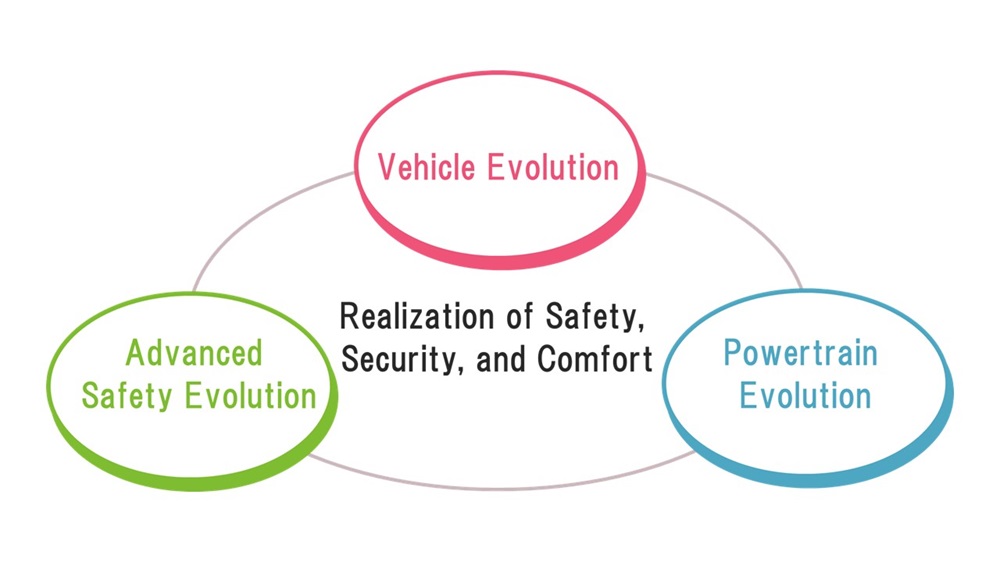
Key advantages of DNGA include:
- Higher structural rigidity – improved chassis stiffness improves ride comfort, handling stability and crash safety, contributing to a 5-star ASEAN NCAP rating.
- Lower centre of gravity – improves cornering confidence and reduces body roll.
- Weight optimisation – extensive use of high-strength steel allows the car to remain lightweight without sacrificing safety.
- Improved NVH (Noise, Vibration, Harshness) – the car feels more refined and solid compared to older Perodua models.
- Integrated safety architecture – ADAS systems are designed into the vehicle from the start rather than added later.
In simple terms, DNGA allows the Ativa to feel like a car from a higher segment despite its compact size and price.
Deep Dive: Daihatsu New Global Architecture (DNGA) platform for next gen Peroduas
The 1KR-VET Turbo Engine
The Ativa is powered by the 1KR-VET, a 1.0-litre turbocharged 3-cylinder engine developed by Daihatsu/Toyota. While the displacement sounds small, this engine represents a modern downsizing philosophy: using turbocharging and advanced combustion technology to deliver strong performance with excellent fuel efficiency.
Key technical highlights of the 1KR-VET:
- Turbocharged with intercooler
- Dual VVT-i (variable valve timing on both intake and exhaust)
- High compression ratio for efficiency
- Lightweight aluminium construction
- Designed for low-RPM torque delivery
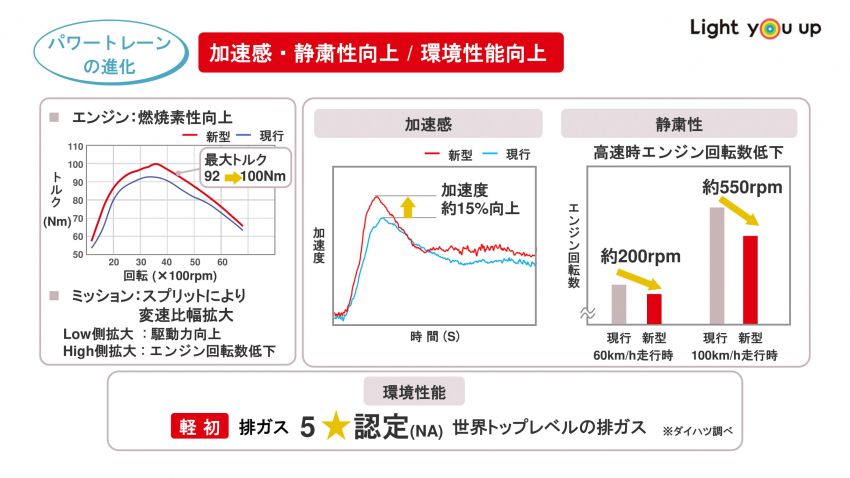
The most impressive characteristic of this engine is its torque curve. Maximum torque of 140 Nm is available from just 2,400 rpm and sustained up to 4,000 rpm. This wide torque band makes the car feel much stronger than its engine size suggests, especially in city driving.
Compared to the naturally aspirated engines found in older Peroduas, the turbo engine delivers:
- Stronger acceleration from low speeds
- Less effort required for overtaking
- Better performance when climbing hills or carrying passengers
- Improved fuel efficiency during highway cruising
This engine is one of the biggest reasons the Ativa feels like a modern car rather than a traditional entry-level vehicle.
Deep Dive: Perodua Ativa SUV: 1KR-VET 1.0L 3cyl turbo deep dive - paultan.org
The Dual-Mode CVT (DCVT) – A Smart Solution to CVT Weaknesses
One of the most unique engineering features of the Ativa is its Dual-Mode Continuously Variable Transmission (DCVT). Traditional CVTs are known for smoothness and efficiency, but many drivers dislike the “rubber band” feeling and reduced efficiency at higher speeds.
The DCVT is Daihatsu’s solution to these limitations.
Unlike a conventional CVT that relies entirely on a belt and pulleys, the DCVT uses a belt drive at low speeds and automatically switches to a planetary gear drive at higher speeds.
This means the transmission effectively has two operating modes:
- CVT Mode (Low speed) Optimised for smooth acceleration, stop-and-go traffic and fuel efficiency in city driving.
- Gear Mode (High speed) Engages a mechanical gear drive for improved efficiency, better power delivery and reduced engine noise during highway cruising.
This hybrid approach provides the best of both worlds:
- Smoother take-off in traffic
- Better fuel economy at cruising speeds
- Reduced CVT “rubber band” sensation
- Lower mechanical stress on the belt, improving durability
In daily driving, the transition between the two modes is seamless and unnoticeable, but it significantly improves real-world driving feel and efficiency.
ADAS safety in the Perodua Ativa (Perodua Smart Drive Assist)
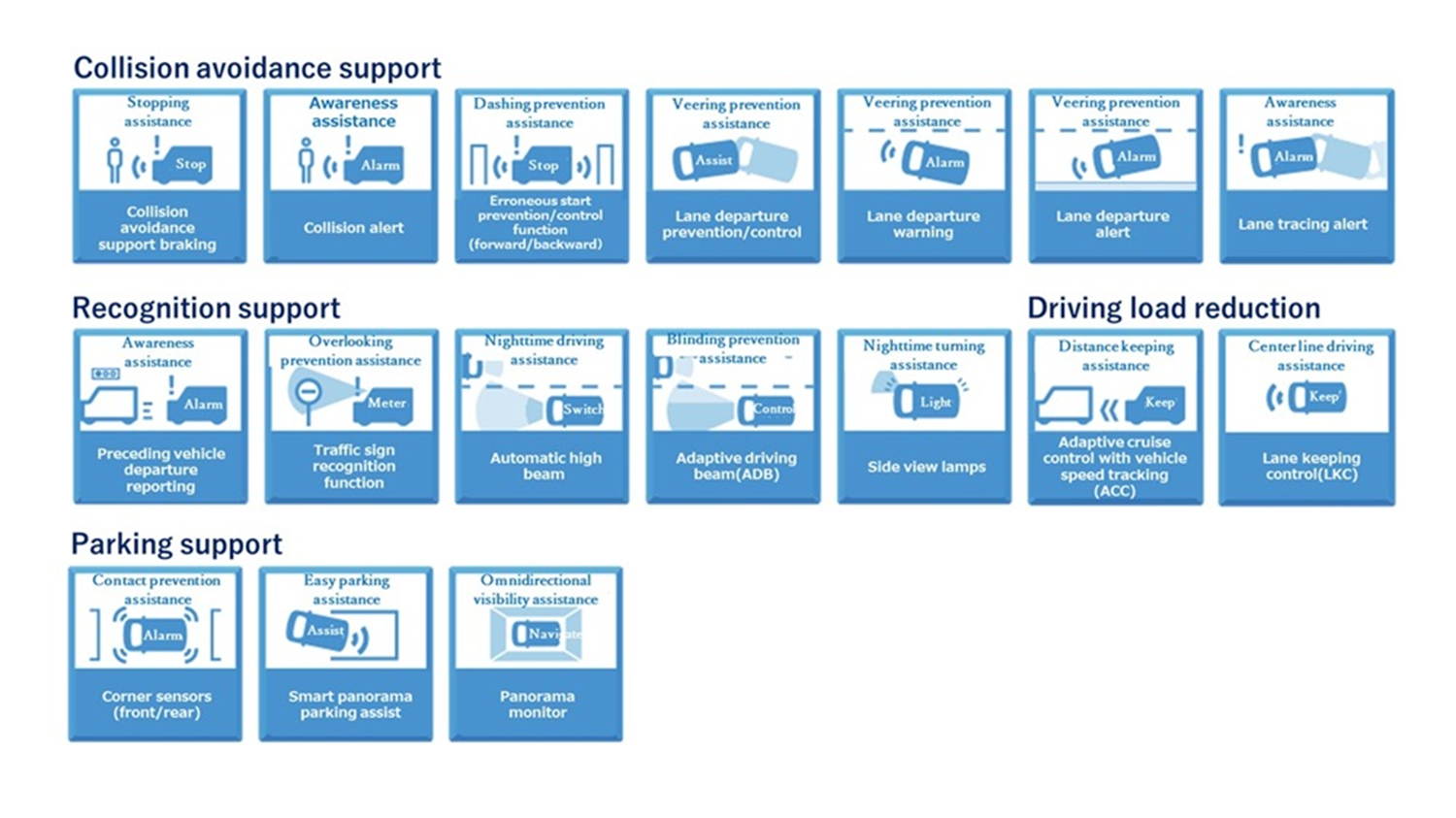
The Perodua Smart Drive Assist (PSDA) system in the Perodua Ativa is derived from Daihatsu Smart Assist, which itself comes from the Toyota safety ecosystem.
This is not a gimmick package — it’s a full Level-2 ADAS suite.
Meaning: the car can control steering + braking + throttle simultaneously in certain conditions.
The system primarily uses:
- A stereo camera module (dual forward cameras)
- Radar-like object detection via vision AI
- Steering torque sensor
- Wheel speed sensors
- Yaw/IMU sensors
This makes it a camera-dominant ADAS architecture, similar to early Toyota Safety Sense generations.
First: Active vs Passive Safety (context)
Before diving into each feature, it’s important to understand the hierarchy.
Passive safety (protects you during crash)
- Airbags
- Seatbelts
- Crash structure
Active safety (prevents crash)
- ABS, ESC
- Traction control
- ADAS
ADAS is the top layer of active safety because it tries to prevent the crash before the driver even reacts.
Architecture overview — What the car “sees”
The stereo cameras continuously build a 3D depth map of the road ahead:
The system can identify:
- Vehicles
- Pedestrians
- Motorcycles
- Road lanes
- Traffic flow speed
- Distance to objects
- Closing speed (time-to-collision)
From this data, the car predicts risk and intervenes.
ADAS feature breakdown (detailed)
1) Adaptive Cruise Control (ACC) with Stop & Go
This is one of the most advanced features in this price segment.
What it does
Maintains:
- Set speed
- Safe following distance
- Automatically brakes and accelerates
How it works technically
The camera estimates:
- Distance to front vehicle
- Relative velocity (closing speed)
- Lane positioning
The ECU runs a PID control loop for throttle and braking to maintain a fixed time gap (usually 1.5–2.5 seconds).
Stop & Go capability
Unlike basic cruise control:
- The car can brake to 0 km/h
- Automatically restart when traffic moves
This is huge for Colombo traffic.
Real benefits
- Reduces driver fatigue in traffic jams
- Prevents rear-end collisions caused by distraction
- Maintains smoother driving → better fuel efficiency
2) Lane Keep Control (LKC) — real steering control
Important distinction:
- Lane Departure Warning: Beeps only
- Lane Keep Assist: Gentle correction
- Lane Keep Control: Continuous steering
The Ativa has the full version.
How it works
The stereo cameras detect:
- Lane markings
- Road curvature
- Vehicle position within lane
The steering ECU applies continuous torque corrections to keep the car centered.
When it activates
- Typically above ~60 km/h
- Requires visible lane markings
Why this matters
This is what enables Level-2 semi-autonomous driving when combined with ACC.
On highways the car can:
- Steer
- Brake
- Accelerate
Simultaneously.
3) Pre-Collision Braking (Autonomous Emergency Braking — AEB)
This is the most life-saving ADAS feature.
Risk prediction algorithm
The system continuously calculates Time To Collision (TTC):
TTC = Distance / Closing Speed
When TTC drops below thresholds:
- Early warning: Visual + beep
- Medium risk: Pre-brake pressure
- Imminent crash: Full emergency braking
Detection targets
The Ativa can detect:
- Cars
- Motorcycles
- Pedestrians
This is especially relevant for Sri Lanka.
Why this is huge locally
Common Sri Lankan risks:
- Sudden tuk-tuk stops
- Motorcycles cutting lanes
- Pedestrians crossing anywhere
AEB specifically mitigates urban low-speed crashes, which are the most common accidents.
4) Front Departure Alert (FDA)
This is underrated but extremely useful in cities.
What it does
When stopped in traffic:
- Detects when the car in front moves
- Alerts you if you don’t react
Why this exists
Human reaction delay in traffic lights = ~1.5–2 seconds.
This feature:
- Reduces traffic delays
- Prevents minor rear-end collisions
- Helps distracted drivers
5) Pedal Misoperation Control (PMC)
Designed for a very specific but common accident type.
Problem it solves
Drivers accidentally pressing:
- Accelerator instead of brake
- Especially during parking
System behaviour
If:
- Obstacle detected ahead
- Accelerator suddenly pressed
The system:
- Reduces engine output
- Prevents sudden surge
This prevents:
- Parking crashes
- Garage wall impacts
- Shopfront accidents
6) Blind Spot Monitoring (BSM)
Uses rear side sensors to detect vehicles in blind zones.
Alerts trigger when:
- Vehicle detected in adjacent lane
- Turn signal activated
Warns via:
- Mirror LED indicator
- Audible warning
Extremely useful for:
- Highway lane changes
- Motorcycles filtering traffic
7) Rear Cross Traffic Alert (RCTA)
Essential for reversing out of parking.
Detects:
- Cars approaching from sides
- Motorcycles crossing behind
This is critical because:
Rear visibility is a major blind zone.
8) Automatic High Beam (AHB)
Camera detects:
- Oncoming headlights
- Tail lights ahead
Automatically switches:
High beam ↔ Low beam
Improves night safety without blinding others.
Combined ADAS capability — Level 2 driving
When ACC + Lane Keep Control work together:
The car can:
- Maintain lane
- Maintain speed
- Maintain distance
- Stop and restart
Driver must still:
- Keep hands on wheel
- Stay attentive
But workload is massively reduced.
Why this matters in Sri Lanka specifically
ADAS is often marketed for highways, but in Sri Lanka it helps even more due to:
Local driving challenges
- Mixed traffic (cars + bikes + tuk-tuks)
- Unpredictable pedestrians
- Sudden braking
- Congested commuting
ADAS acts as a second pair of eyes.
The reality check (important)
ADAS is driver assistance, not autopilot.
Limitations:
- Needs visible lane markings
- Performance reduces in heavy rain
- Camera can be affected by dirt
- Driver must stay attentive
But even with limitations:
It dramatically reduces accident probability.
Exterior & Design
From the outside the Ativa AV looks more expensive than it is, and that was a big part of the appeal for me. The front is dominated by full-LED headlamps with Adaptive Driving Beam, LED daytime running lights and sequential turn signals that sweep rather than blink. Mine came in Glittering Silver, but the AV is also the only variant offered with the two-tone option and a contrasting black roof.
The AV rides on 17-inch dual-tone alloys wrapped in 205/60 R17 tyres, and unlike the Japanese twins it carries a full-size alloy spare rather than a repair kit — a detail I appreciate given the state of some roads here. At 4,065 mm long with 200 mm of ground clearance, it is compact enough for tight Colombo parking but tall enough to clear the speed humps and flooded patches that catch low sedans out.
Interior & Cabin
Inside, the AV is the variant that gets the nice things. The seats are finished in leather with red stitching and red accents across the dashboard and doors, and there is ambient lighting in the footwells that gives the cabin a genuinely upmarket feel at night. After nearly a decade in the Axia, stepping into this cabin feels like a generation jump.
The centrepiece is a fully digital instrument cluster, exclusive to the AV, with several configurable display styles — you can switch between a classic twin-dial look and a more modern, data-rich layout. Material quality, switchgear and the general solidity of the doors are all a clear step above what Perodua used to offer, which is the DNGA platform showing through.
Infotainment & Connectivity
The AV comes with a 9-inch touchscreen head unit with Bluetooth, USB and AUX inputs, voice recognition and steering-wheel audio controls. One honest caveat: there is no native Apple CarPlay or Android Auto. Perodua offers Smart Link / Mirror Link instead, which mirrors an Android phone but needs an add-on app and a cable, and it is the weakest part of the package. If you live on Google Maps and Spotify like I do, this is the one area where the car feels behind the times.
What makes up for it is the 360-degree Panoramic View Monitor, standard on the AV. Four cameras stitch together a bird’s-eye view of the car, which combined with the reverse camera makes squeezing into tight parking spots almost effortless. In a country where parking is improvised more often than marked, this gets used every single day.
Comfort & Convenience
The AV adds the convenience features you actually use daily:
- Keyless entry with push-button start (standard across the range)
- PWR drive mode, exclusive to the AV, which sharpens throttle response when you want it
- Eco Idle stop-start, which cuts the engine at red lights to save fuel
- Automatic air-conditioning
- Steering-wheel-mounted audio and cruise controls
Eco Idle deserves a mention for local conditions: in Colombo stop-go traffic the engine spends a lot of time switched off, and with the small 36-litre tank every bit of saved fuel counts.
Passive Safety & Body Hardware
The ADAS suite above is the headline, but the fundamentals are strong too. The Ativa AV ships with six airbags, ABS with EBD and Brake Assist, Vehicle Stability Control, Traction Control, Hill-Start Assist and ISOFIX anchors as standard. Together with the rigid DNGA body shell, this is what earned the Ativa its 5-star ASEAN NCAP rating — a level of crash protection that simply did not exist at this price point in Sri Lanka a few years ago.
Living With the Ativa AV
When vehicle imports to Sri Lanka reopened in 2025 after years of restrictions during the foreign-currency crisis, the backlog of demand meant getting any new car quickly was a challenge. Mine arrived in December 2025 from the very first bulk shipment of Ativas to the country, which made it feel like a bit of an event.
Coming from the naturally aspirated Axia, the single biggest change is the turbo torque. Having 140 Nm available from 2,400 rpm completely changes how the car drives in traffic — no more flooring the pedal and waiting for the revs to climb. Pulling out of junctions, overtaking, climbing the hill roads up-country, the little 1.0-litre turbo simply does not feel like a 1.0-litre. The D-CVT keeps it smooth in town and settles down on the highway, and Eco Idle means the engine is off for a surprising amount of my daily commute.
Final Thoughts
Six months in, the Ativa AV has delivered exactly what attracted me to it: genuinely modern engineering — the DNGA platform, the turbo triple, the dual-mode CVT — wrapped in a Level-2 ADAS safety package that is still rare anywhere near this price in Sri Lanka. It is not perfect. The lack of wired CarPlay or Android Auto is a real annoyance, and the rear drum brakes and torsion-beam rear axle are reminders of where the cost was saved. But none of that undoes the core value.
For a daily-driven urban SUV that has to deal with mixed traffic, unpredictable pedestrians and improvised parking, the safety tech alone justifies the AV over the lower variants. After a decade with my Axia, this feels like the right car at the right time. I will follow up with real-world fuel-economy figures and longer-term reliability notes once I have put more kilometres on it.