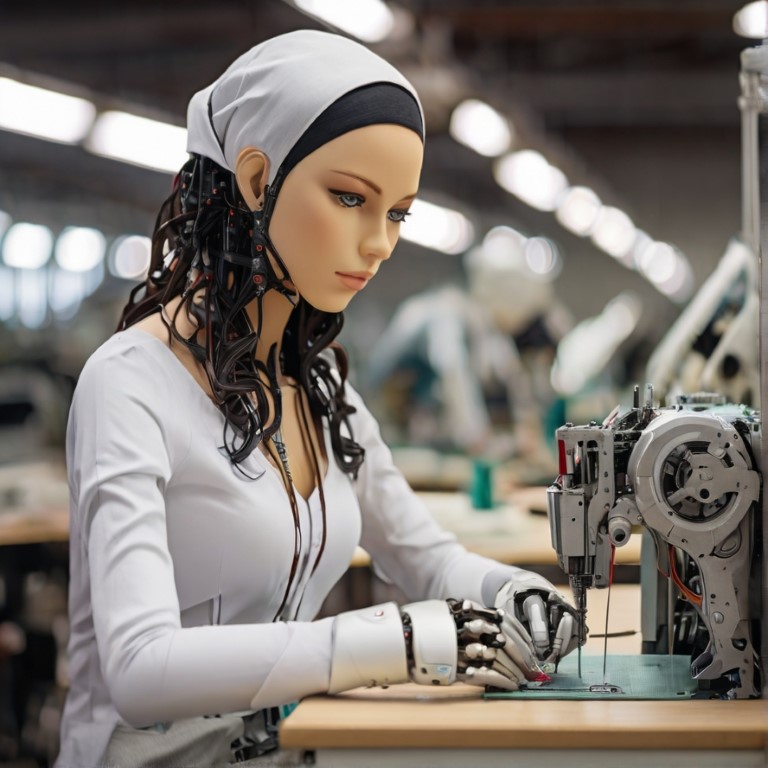
In today’s textile and apparel industry, automation isn’t just a competitive advantage—it’s becoming the standard. Among all the production stages, fabric cutting is one of the most time-consuming and precision-critical steps. Automating it can dramatically increase efficiency, reduce errors, and streamline overall workflow.
But cutting is only one part of the journey. To unlock the full benefits of automation, it’s important to understand the entire ecosystem: the processes that happen before cutting (pre-production) and those that take place after cutting (post-processing). Modern tools, AI systems, and smart-factory technologies can optimize each phase, creating a seamless, end-to-end manufacturing pipeline.
1. Before Fabric Cutting: Automating Pre-Production
Before a single meter of fabric is cut, several preparation steps must be completed. Historically, these were labor-intensive tasks—but today, advanced automation is transforming pre-production.
a. Fabric Roll Unloading, Storage & Retrieval
Efficient handling of fabric rolls reduces manual strain and speeds up the workflow.
Automation Tools:
-
Telescopic and Flexible Conveyors – For unloading and transferring rolls from trucks or between departments.
-
Ergonomic Lifting Aids – Assist human operators while reducing injury risk.
-
Pick-to-Light Systems – Guide operators to the correct roll storage location for fast and error-free retrieval.
-
Automated Guided Vehicles (AGVs) – Transport fabric rolls across the factory autonomously.
-
ASRS (Automated Storage and Retrieval Systems) – Robotic systems that organize and retrieve rolls based on demand.
-
Carousels – Rotating automated storage units ideal for high-density roll storage.
-
Storage Optimization Techniques
-
Pigeon-Hole Fabric Storing – Efficient cubby-style storage for faster access and better inventory organization.
b. Fabric Inspection
Fabric inspection ensures defects are identified before production begins, preventing waste and quality issues.
Automation Tools:
-
Automated Fabric Inspection Machines with AI Algorithms – Detect defects such as holes, stains, or shade variations in real time.
-
Computer Vision Cameras – Machine-learning models analyze patterns and textures with high accuracy.
-
Spectrometry Devices – Measure and verify color consistency across rolls.
-
GSM Inspection Tools Using Machine Vision – Automatically measure fabric weight and density.
-
Auto Swatch Cutting Systems – Create consistent, automated fabric swatches for quality sampling.
c. Spreading / Layup
Uniform spreading ensures the cutting process runs smoothly and efficiently.
Automation Tools:
-
Automatic Fabric Spreading Machines – Spread fabric evenly while maintaining tension and alignment.
-
Programmable Tension Control Systems – Adjust tension based on fabric type to reduce distortion and wrinkles.
d. Marker Making / Pattern Optimization
Marker making determines how patterns are arranged on fabric, directly influencing material consumption.
Automation Tools:
-
CAD (Computer-Aided Design) Systems – Tools like Gerber AccuMark, Lectra Modaris, and Optitex generate optimized digital patterns.
-
AI-Driven Marker Optimization – Algorithms consider fabric width, shrinkage, grain direction, and pattern geometry to reduce waste and improve yield.
2. Automation During Fabric Cutting
The cutting stage benefits the most from modern automation, offering unmatched precision, speed, and consistency.
a. CNC Automated Cutting Machines
CNC systems are the cornerstone of automated cutting rooms.
Key Features:
-
High-precision blades or oscillating knives
-
Automatic layer-height detection
-
Vacuum tables for fabric stability
-
Seamless integration with digital marker files
These machines dramatically reduce labor requirements and can cut hundreds or thousands of layers with extraordinary accuracy.
b. Laser Cutting
Laser cutting is ideal for intricate shapes and delicate or synthetic fabrics.
Benefits:
-
No blade wear or maintenance
-
Clean, sealed edges (perfect for polyester and synthetics)
-
Ultra-precise cuts for detailed patterns
c. Waterjet Cutting
Waterjet cutting uses a high-pressure water stream.
Benefits:
-
Excellent for technical and multi-layer textiles
-
No heat damage
-
Very smooth and accurate edges
d. Die Cutting (Automated Presses)
Die cutting is widely used for home textiles, footwear, and leather goods.
Benefits:
-
Extremely fast cycle times
-
High repeatability
-
Perfect for repetitive shapes
3. After Fabric Cutting: Automating Post-Cut Operations
Once fabric is cut, proper handling becomes crucial to maintain order and avoid production delays.
a. Sorting and Bundling
Cut pieces must be grouped by size, color, style, and sewing order.
Automation Tools:
-
Automated Sorting Systems – Vision-guided robots identify and sort pieces accurately.
-
Barcode or RFID Tagging – Enables full digital traceability through the sewing line.
b. Numbering and Labeling
Pieces often require identification marks to ensure correct assembly.
Automation Tools:
-
Automated Label Applicators – Print and apply labels with pattern IDs, sizes, or QR codes.
-
Digital Print Marking Systems – Print alignment marks or instructions directly onto fabric pieces.
c. Material Handling & Transport
Transporting cut pieces efficiently ensures a smooth production flow.
Automation Tools:
-
Conveyor Systems – Move pieces from cutting to sewing without manual intervention.
-
AGVs – Deliver bundles across factory floors.
-
Robotic Pick-and-Place Arms – Handle delicate pieces and reduce bottlenecks.
4. Integrating the Entire Workflow With Digital Platforms
True automation happens when every system communicates seamlessly.
a. PLM Systems (Product Lifecycle Management)
Centralize design data, material specifications, and product development workflows.
b. MES Systems (Manufacturing Execution Systems)
Monitor and track real-time production—from cutting rooms to sewing lines—ensuring visibility and control.
c. IoT & Smart Factory Technology
Sensors and connected machines track fabric consumption, machine performance, and inventory levels.
d. AI Predictive Analytics
AI models forecast production delays, highlight inefficiencies, and suggest material-usage optimizations.
5. Benefits of Automating the Fabric Cutting Workflow
-
Higher Precision – Minimized errors and consistent quality
-
Lower Costs – Reduced fabric waste and labor needs
-
Increased Speed – Faster processing from spreading to bundling
-
Better Quality Control – Defects caught early, reducing rework
-
Scalability – Easily scale production with predictable output
-
Traceability – Complete visibility from raw material to finished garment
Conclusion
Automating the fabric cutting process is not just about upgrading machines—it’s about optimizing the entire workflow, from fabric unloading and inspection to post-cut sorting and transport. With modern CAD systems, automated spreaders, CNC cutters, vision-guided robotics, and AI-driven planning, textile manufacturers can dramatically boost productivity, speed, and quality.
As automation becomes more accessible and affordable, even small and medium apparel businesses can take advantage of these technologies—reducing costs, improving precision, and staying competitive in a fast-evolving industry.