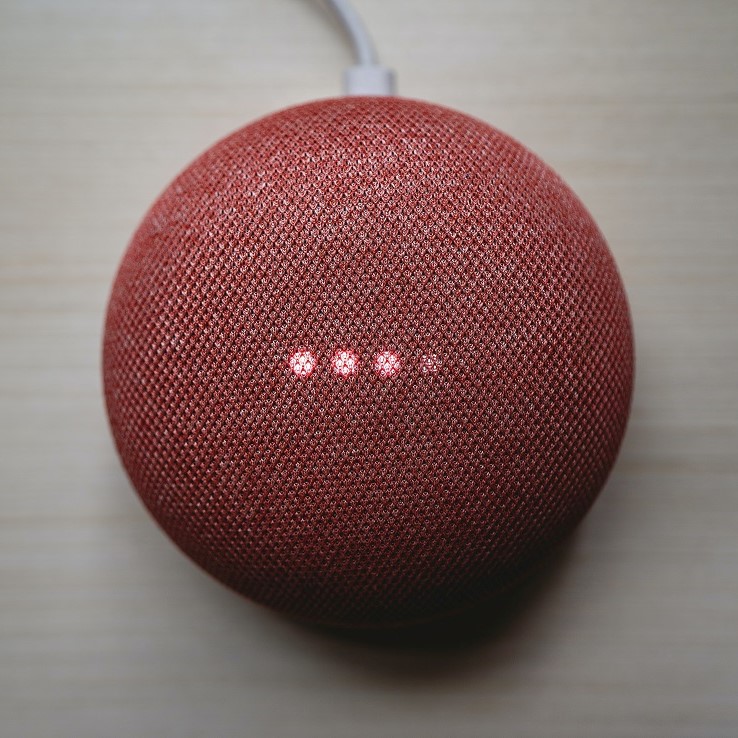
During the past few years we have seen the use of voice assistants being used by most people in their day-to-day lives. Voice assistants such as Siri, Google Now, Alexa and Cortana are available for free on your mobile devices and are capable of doing a huge range of tasks to make your life a little bit easier. The same voice assistants are also available on stand-alone smart speakers which have been growing in popularity recently.
But if you're thinking of buying a stand-alone smart speaker like Alexa maybe, consider building your own with a Raspberry Pi, some programming knowledge and the handy guides I found below.
Completely DIY build
It is very possible to completely build your virtual assistant from scratch on a Raspberry Pi and it could be fun! Python has some pre-built libraries which can help you achieve this.
Using Pythons speech recognition library we can use free online resources (some available offline too) such as Googles Cloud Speech API to convert your speech to text. Using these as instructions or commands, we can process them using some simple python codes such as;
- pywhatkit - For sending whatsApp messages, playing YouTube or searching on web
- wikipedia - For getting summaries from Wikipedia
- pyjokes - For random nerdy programming jokes
Next we can speak out this using the text to speech library also available for free. The video below shows a helpful guide on how you can use these libraries to build a simple Alexa (but not quite) at home.
Mycroft
Mycroft in a Linux based virtual assistant that you can install on your Raspberry Pi. Although they have a commercial smart speaker called Mark, you can install the Pi version of Mycroft for free from their GitHub.
Here is a step by step guide on how you can build your own Mycroft on a Raspberry Pi. > How to Make Your Own Open-Source Voice Assistant With Raspberry Pi.
Jasper
Jasper is another open-source project like Jasper which you can install on your Pi. It is developed by two Princeton University students and you can view all their documentation on their GitHub site. Although Jasper has some limited functionality, there is a developer API which allows Python code to be implemented by developers.
Steven Hicksons Pi AUI suit
This is a DIY project by Steeve where he has taken apart an old intercom box and plugged in a Raspberry Pi to convert it in to a virtual assistant. Thankfully he has put up an instructable where you can follow his steps to build your own virtual assistant using his software.

AIY projects with Google
This I think is a very cool DIY for the maker community where you can build your own tiny AI powered voice assistant in a box. You can see a DIY instruction list here.
A few more projects
Artificial Intelligence Pi - Alexa